





Technical Snapshot
Issue: Tile Delamination on Pool Water Feature Walls
Tiles installed to pool water feature walls are exposed to demanding service conditions, including constant moisture, splash zones, water movement, and chlorinated pool water.
In this case, tiles on the water feature wall adjacent to the pool have become drummy, loose, and are delamination from the substrate in areas directly exposed to the pool water.
This type of failure is not simply an adhesive issue. Tile delamination in pools and water feature areas often indicates a breakdown within the waterproofing, substrate preparation, or tile installation system.
What causes tile delamination in pool water feature areas?
- Use of a waterproofing membrane not suitable for continuous immersion or chlorinated pool environments.
- Long-term exposure to chlorinated pool water degrading the membrane system.
- Loss of bond between the membrane, adhesive, tile, and substrate.
- Poor surface preparation, including contamination from dirt, laitance, old membrane, glue, or other contaminates.
- Use of adhesives or installation systems not suitable for pool and water feature applications.
If left untreated, tile delamination can lead to:
- Further tile delamination and safety risks around the pool area.
- Ongoing water ingress into the substrate.
- Deterioration of waterproofing membranes, adhesives, and repair mortars.
In this instance, the original waterproofing membrane installed behind the tiled water feature wall appears to have been unsuitable for a chlorinated pool environment. Over time, exposure to chlorinated pool water has likely degraded the membrane system, resulting in loss of bond and subsequent tile failure.
Tile Delamination
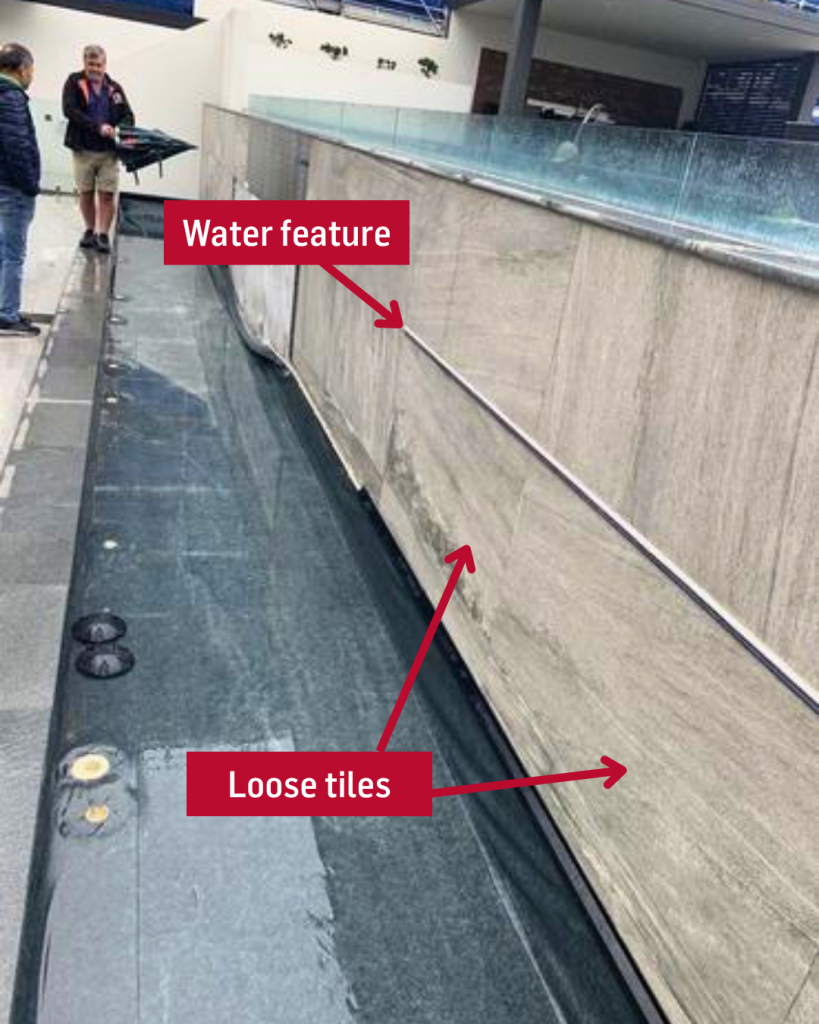 Pic 1. Loose tiles are visible on the water feature wall exposed to pool water.
Pic 2. Tile separation from the substrate is visible.
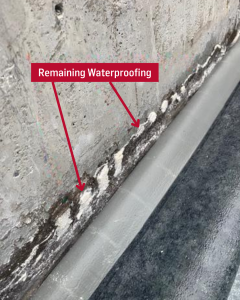
Pic 3. Remaining waterproofing and adhesive residue can be seen on the exposed substrate.
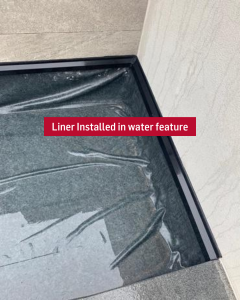
Pic 4. A liner has been installed in the water feature area.
Solution
When repairing tiled pool water feature areas, the system must be suitable for continuous moisture exposure, chlorinated water, and the specific service conditions of the pool environment. The following steps should be addressed during remediation:
Remove Affected Tiles. Remove all loose, drummy, and affected tiles within the water feature area. The full extent of delamination should be assessed before repairs begin, as failure may extend beyond visibly loose tiles.
Prepare and Repair the Substrate. The substrate must be sound, clean, dry where required by the selected system, and free from laitance, dirt, old membrane, glue, adhesive residue, and other contaminants. Any damaged or uneven areas should be repaired using a suitable concrete repair mortar before re-waterproofing.
Install a Suitable Waterproofing System. A waterproofing system designed for continuous immersion and chlorinated pool environments must be used. Suitable options may include:
- LATICRETE Pool System.
- WPA 560 applied in two coats with WPA 200 and TPA Lite, where suitable for the application and installed in accordance with manufacturer requirements.
Re-tile Using Pool-Grade Adhesives. Once waterproofing has been completed and cured, the wall should be re-tiled using appropriate pool-grade adhesives and installation methods. All products should be selected as part of a compatible system and installed strictly in accordance with the manufacturer’s technical data sheets.
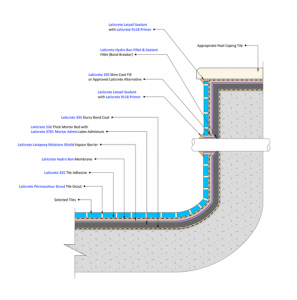 Pic 5. LATICRETE Pool System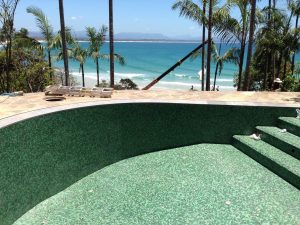
Pic 6. A good example of pool waterproofing using the LATICRETE Pool System.
Download This Technical Snapshot
Where the waterproofing and tile installation system is not designed for the correct service environment, premature failure can occur.
However, with the right product selection, surface preparation, and installation approach, tile debonding in pool and water feature areas is entirely preventable.
For expert advice and product recommendations, contact your local Bayset representative at 1300 BAYSET.
Related Articles
See All Articles
Technical Snapshots
Technical Snapshot: Curing Of Substrate Prior To Membrane Application

Technical Snapshots
Technical Snapshot: Flexible Collars on Pipes

Technical Snapshots
Technical Snapshot: Screed Strengths – Traditional & Engineered

Technical Snapshots