


Technical Snapshot
Issue: Positive-Side vs Negative-Side Waterproofing: What’s the Difference?
Choosing between positive-side and negativeside waterproofing can be confusing. While both approaches are designed to manage water ingress, they work in different ways and are suited to different applications.
Selecting the wrong waterproofing approach can result in ongoing leaks, deterioration of the structure and costly remedial works.
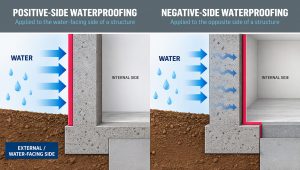
Pic 1. Positive-Side Waterproofing vs Negative-Side Waterproofing
What is positive-side waterproofing?
Positive-side waterproofing is installed on the side of the structure directly exposed to water. It prevents water from entering the substrate and reaching the internal face of the structure.
Positive-side waterproofing is generally preferred for new construction where the water-facing or external side of the structure is accessible.
What is negative-side waterproofing?
Negative-side waterproofing is installed on the opposite side of the structure. It resists water after moisture has already penetrated the substrate.
This approach is commonly used where the external face cannot be accessed, including basement walls, lift pits, tunnels and remediation projects.
What causes incorrect waterproofing system selection?
Confusion between positive-side and negative-side waterproofing can lead to the wrong waterproofing approach being specified or installed.
Common considerations that can affect the selection include:
- The location and source of the water.
- Whether the water-facing side of the structure can be accessed.
- Whether the project is new construction or remedial work.
- The anticipated level of hydrostatic pressure.
- The condition and compatibility of the substrate.
- Whether drainage can be incorporated to reduce water pressure against the structure.
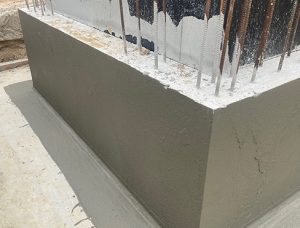
Pic 2. Positive-side waterproofing applied during new construction.
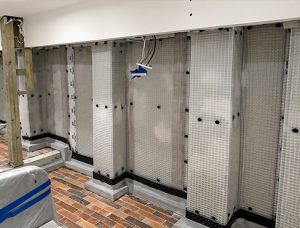
Pic 3. Negative-side waterproofing – Newton 503 Cavity Drain Membrane System used for an internal remedial application.
If the wrong approach is selected, it can lead to:
- Ongoing water ingress and moisture within the structure.
- Recurring leaks requiring further remedial work.
- Deterioration of the concrete over time.
- Potential corrosion of the reinforcement steel.
- Additional repair costs and disruption.
When negative-side waterproofing is used in a situation where positive-side waterproofing is practical, water may continue to enter and remain within the substrate before reaching the waterproofing layer. Over time, this may contribute to deterioration of the concrete or corrosion of the reinforcement steel.
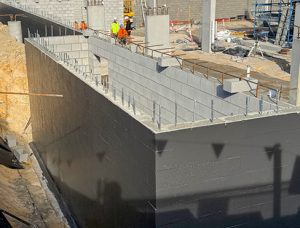 Pic 4. Positive-side waterproofing – WPA waterproofing system comprising WPA 560, WPA 992.
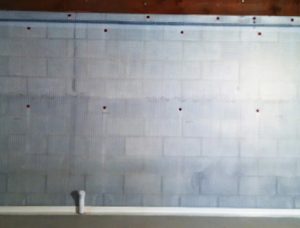
Pic 5. Negative-side waterproofing – Newton System 500 cavity drain system installed for an internal remedial application.
Solution
The required waterproofing approach should be selected based on the structure, accessibility, source of water and expected site conditions.
Use positive-side waterproofing wherever practical: Where the water-facing side of the structure is accessible, positive-side waterproofing should be adopted to prevent water from entering the structure. This is generally the preferred approach for new construction.
Use negative-side waterproofing where external access is not possible: Negative-side waterproofing may be suitable for remedial projects or situations where excavation and access to the exterior of the structure are not practical.
Consider hydrostatic pressure: Determine the expected level of hydrostatic pressure and confirm that the selected waterproofing system is designed to withstand the anticipated conditions.
Prepare the substrate correctly: The substrate must be properly prepared and compatible with the selected waterproofing system. All products should be installed in accordance with the manufacturer’s current technical data sheets and installation requirements. The original copy specifically identifies substrate preparation and compatibility as important considerations.
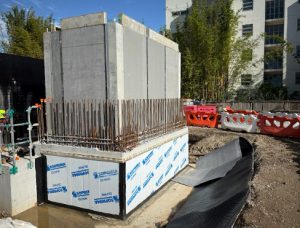
Pic 6. Positive-side waterproofing – Soprema Colphene 3000 System installed to a lift fit.
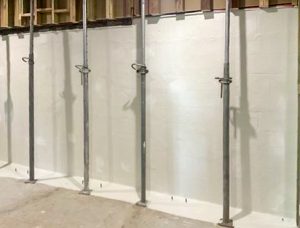
Pic 7. Negative-side waterproofing – WPA 560 used for an internal application.
Download This Technical Snapshot
Positive-side and negative-side waterproofing both have an important place in construction, but they serve different purposes.
For expert advice and waterproofing system recommendations, contact your local Bayset representative at 1300 BAYSET.
Related Articles
See All Articles
Technical Snapshots
Technical Snapshot: Curing Of Substrate Prior To Membrane Application

Technical Snapshots
Technical Snapshot: Flexible Collars on Pipes

Technical Snapshots
Technical Snapshot: Screed Strengths – Traditional & Engineered

Technical Snapshots