





Technical Snapshot
Issue: Ponding Water on Rooftops
Ponding water occurs when water remains on a roof surface for more than 48 hours after rainfall. While many waterproofing systems resist water, prolonged standing water requires careful consideration of the roof design and membrane selection. Persistent ponding can reduce the life of the waterproofing system, increase maintenance requirements and, in some cases, contribute to structural concerns.
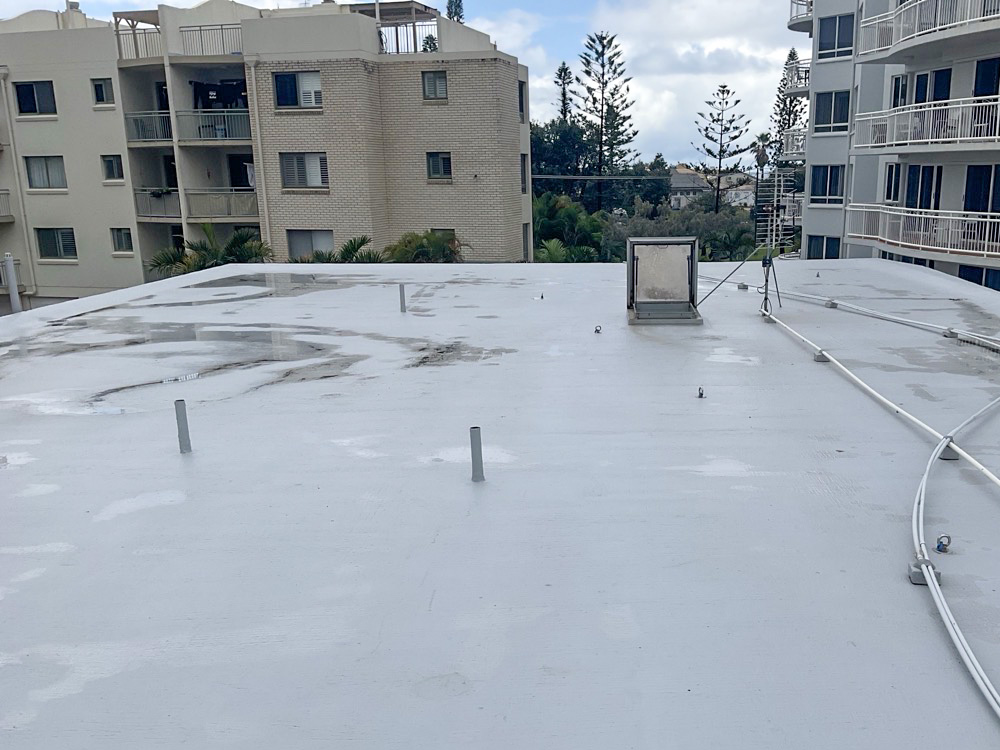
Pic 1. Ponding water across a flat rooftop following rainfall.
What Causes Ponding Water?
Several roof design, drainage, construction and maintenance issues can cause water to remain on a rooftop.
- Insufficient roof falls: Insufficient falls can prevent water from draining effectively and allow it to collect across the roof surface.
- Poor drainage design: Too few drainage outlets, or poorly positioned drains, sumps or overflow provisions, can restrict effective drainage.
- Construction variations: Variations in concrete slabs or screeds can create low spots where water collects.
- Structural movement: Settlement or movement over time can create low spots and change how water drains across the roof.
- Blocked drains: Leaves, dirt and other debris can block drainage outlets and restrict water flow.
- Incorrect screed installation: Incorrectly formed screed falls can create areas where water collects during construction or remedial works.
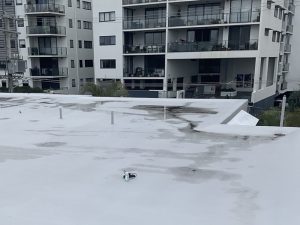
Pic 2. Multiple areas of ponding water across the roof surface, showing the extent of water retention.
If Left Unaddressed…
Persistent ponding water may:
- Reduce the service life of the waterproofing system.
- Increase ongoing maintenance requirements.
- Contribute to membrane deterioration.
- In some cases, contribute to structural concerns.
Importantly, ponding water does not necessarily mean the waterproofing membrane has failed. The underlying cause may relate to the roof falls, drainage, construction or structural levels.
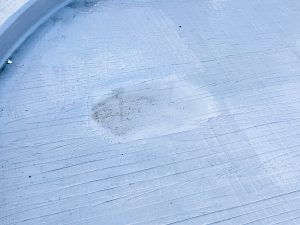 Pic 3. Close-up of a low spot where water can collect on the roof surface.
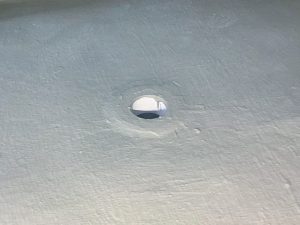
Pic 4. Drainage outlet positioned above the surrounding surface.
Solution
Preventing ponding water starts with good roof design and construction, followed by regular inspection and maintenance.
Design roof falls correctly. Design roof falls in accordance with NCC and AS 4654 recommendations to support effective drainage.
Provide adequate drainage. Install enough drainage outlets and position overflow systems correctly to help move water away from the roof surface.
Form accurate screed falls. Use experienced installers to form accurate screed falls and minimise low spots where water can collect.
Choose the appropriate waterproofing membrane. Select a waterproofing membrane suited to the intended exposure and expected service conditions.
Keep drainage systems clear. Regularly inspect and clean roof drainage systems. Removing leaves, dirt and other debris helps maintain effective water flow.
Address low spots early. Investigate and address low spots or structural deflection before they contribute to membrane deterioration.
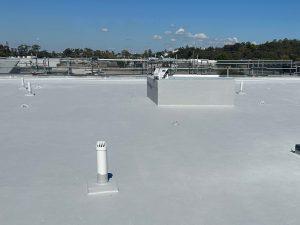
Pic 5. Completed waterproofed roof showing a clear surface with no visible areas of standing water.
Download This Technical Snapshot
Investigate the cause first. Ponding water can result from a range of factors, including roof falls, drainage, construction variations, structural movement and blocked drains.
If water remains on the roof more than 48 hours after rainfall, investigate the roof design, drainage and site conditions to identify the cause and determine the appropriate action.
Good roof design, correct falls, effective drainage and ongoing maintenance helps to prevent standing water, maximise membrane performance and extend the life of the waterproofing system.
For expert advice and waterproofing system recommendations, contact your local Bayset representative at 1300 BAYSET.
Related Articles
See All Articles
Technical Snapshots
Technical Snapshot: Curing Of Substrate Prior To Membrane Application

Technical Snapshots
Technical Snapshot: Flexible Collars on Pipes

Technical Snapshots
Technical Snapshot: Screed Strengths – Traditional & Engineered

Technical Snapshots